
JusTech
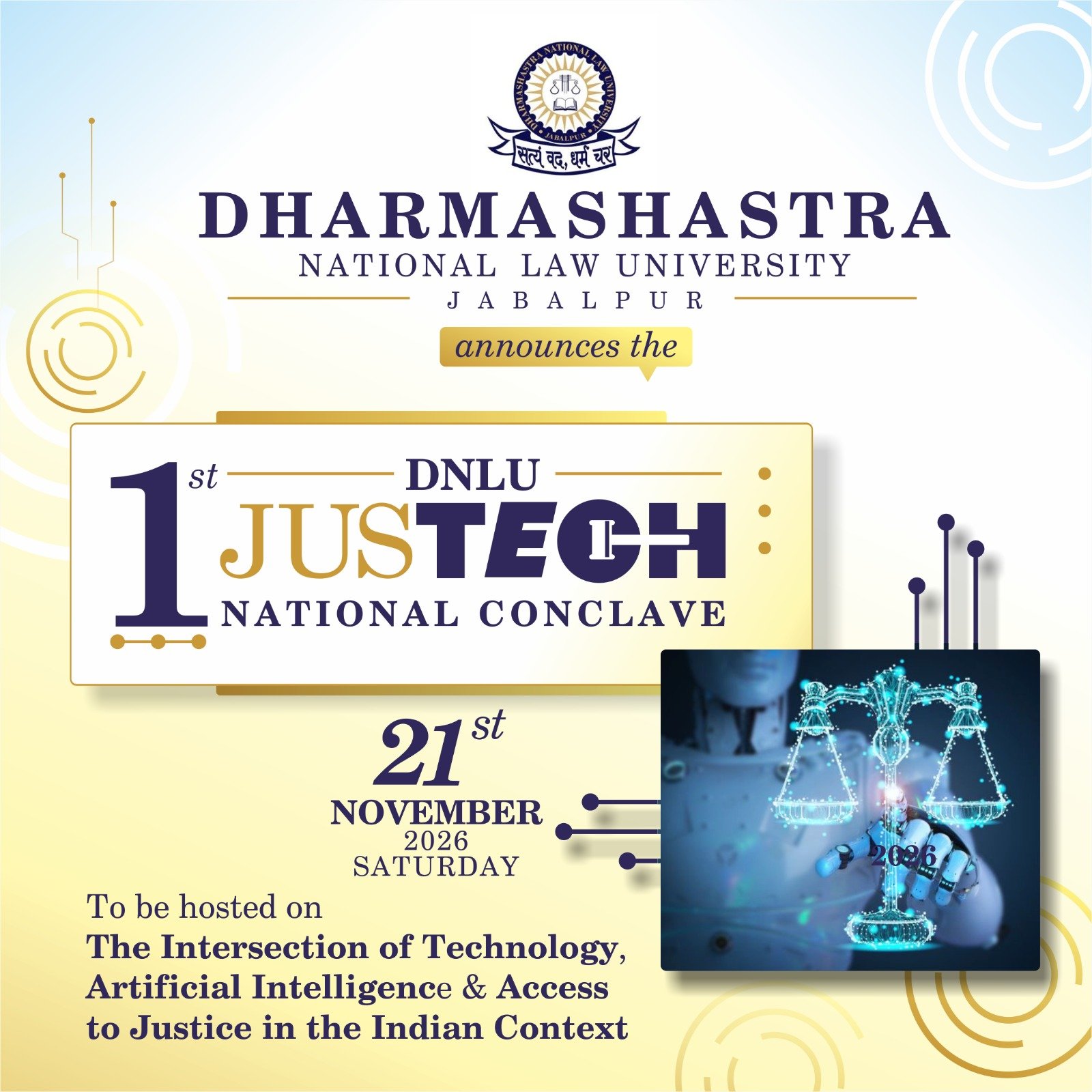
1st DNLU National Conclave · Dharmashastra National Law University, JabalpurThe Intersection of Technology, Artificial Intelligence & Access to Justice in the Indian Context
About the Conclave
The 1st DNLU National Conclave – JusTech – explores the evolving intersection of law, technological innovations and access to justice, bringing contemporary questions surrounding emerging technologies and the justice system into focus.
India stands at a defining moment. With a justice delivery system that struggles to reach the last mile, the question is no longer whether technology will reshape the legal landscape, rather it is whether that reshaping will expand justice or entrench upon inequality.
Two Thematic Sessions
The Conclave will feature two thematic sessions: a Pre-Lunch Session and a Post-Lunch Session.
Algorithmic Justice on the Driver’s Seat: Reincarnating the Judiciary through AI & Technology
Implications of AI-driven tools in law enforcement, risk assessment and judicial decision-making, with focus on guardrails against algorithmic bias, fairness, due process, transparency and human oversight.
Read the concept note →Bridging the Justice Gap: Democratisation of the Legal System through Tech Tools
The role of Generative AI and LegalTech in expanding access to legal services – AI-powered legal assistance, inclusive and affordable legal aid, smart contracts and technology-enabled ADR.
Read the concept note →Algorithmic Justice on the Driver’s Seat: Reincarnating the Judiciary through AI & Technology
This session would examine the implications of AI-driven tools in law enforcement, risk assessment and judicial decision-making, with particular focus on guardrails against algorithmic bias, fairness, due process, transparency and human oversight in technology-assisted justice systems.
India’s judiciary has moved beyond experimentation. The Supreme Court’s Artificial Intelligence Committee oversees AI deployment across the justice system. Under the e-Courts Project, Phase III, AI integration covers translation, prediction, administrative efficiency, automated filing, intelligent scheduling and litigant communication. Approved by the Union Cabinet as a four-year Central Sector Scheme from 2023 with an outlay of Rs. 7,210 crore, Phase III aims to move courts towards a paperless, online model by digitising all court records, including old ones, and the Government has stated that AI, machine learning and natural language processing are being used in the e-Courts software applications under it. Tools such as SUPACE are assisting Judges with precedent research; SUVAS has translated over 31,000 Supreme Court judgments into scheduled languages; LegRAA supports legal research and document analysis; and Adalat AI has demonstrated 2–3x increases in judicial productivity in randomised controlled trials, with Kerala becoming the first judiciary globally to mandate its statewide use.
However, these developments still raise unresolved constitutional concerns. Facial Recognition Technology has been deployed in over 170 systems across India, with Delhi Police using it in more than 750 riot investigations. Yet over 80% of cases that reached verdict ended in discharge or acquittal. One individual spent 4.5 years in custody based substantially on an 80% similarity score from a CCTV frame. Academic research confirms that Indian bail outcomes already differ significantly by gender, religion, caste, and socioeconomic status, and AI trained on skewed data risks amplifying these disparities. With 70–75% of India’s prison population comprising undertrial detainees, the stakes could not be higher. Bias in machines, opacity in how they work and risks to privacy can erode not only individual rights but the independence of the judiciary itself, the very independence that Late Shri Justice H.R. Khanna fought for.
The Supreme Court’s Draft Regulations for Use of Artificial Intelligence in Courts, 2026 mark India’s most significant regulatory response. They prohibit AI-based adjudication and sentencing, ban AI for bail risk scoring and recidivism prediction, require that AI must not perpetuate bias on constitutionally prohibited grounds, and affirm that accountability for AI-assisted decisions rests entirely with the judicial officer. This is consistent with the general principle in NITI Aayog’s AI for All approach that AI should only assist decision-making, while the act of deciding must remain with human beings. Courts have begun setting such limits themselves. In July 2025, the Kerala High Court became the first High Court to frame rules restricting the use of AI in the district judiciary: its policy provides that AI tools can never be used to arrive at decisions, issue orders or write judgments, and it requires courts to maintain a complete record of every instance in which AI tools are used. The Digital Personal Data Protection Act, 2023 provides the broader data governance framework, but significant gaps remain. Unlike the EU GDPR, India’s law lacks explicit protections against automated decision-making and does not grant individuals the right to contest algorithmic decisions.
The question before the session How do we build the audit mechanisms, bias-testing protocols, and accountability structures that the current regulatory framework gestures toward but does not yet fully architect?
Transparency, meaningful human oversight and security must be the foundations, because speed without fairness would serve no one. Used within these limits, AI can help judges decide, in the words of the constitutional oath, “without fear or favour.”
Bridging the Justice Gap: Democratisation of the Legal System through Tech Tools
This session would focus on the role of Generative AI and LegalTech in expanding access to legal services, with emphasis on AI-powered legal assistance, inclusive and affordable legal aid, smart contracts and technology-enabled Alternative Dispute Resolution (ADR).
India’s justice system faces deep and structural problems. Over 1.7 lakh cases have been pending for more than 30 years. In the High Courts alone, 18,98,833 criminal cases are pending, with 68.27% pending for over a year. The police-to-population ratio stands at 155 per 100,000, well short of the UN benchmark of 222. A majority of Indians lack effective access to legal services due to two intertwined reasons, that is, the unavailability of a sufficient number of good quality lawyers and the high costs of accessing legal services. India’s 50 million pending cases would take 300 years to clear at current rates, with 90% of Courts lacking stenographers. Part of this delay is administrative: courts are overloaded with sorting papers, fixing dates, preparing transcripts and tracing past cases, which are precisely the tasks that AI can take over, leaving judges more time for judging.
Technology can help improve access to justice, if it is used carefully and made accessible to everyone. AI works best when it is embedded in the e-Courts Mission Mode Project, which has brought e-filing, online case tracking, digital payment of court fees, electronic service of notices, virtual courts and the National Judicial Data Grid (NJDG). The NJDG provides real-time data on pending and disposed cases, which AI can use to identify bottlenecks and prioritise important matters. The value of e-courts was proved during the COVID-19 pandemic, when video conferencing kept courts functioning (In Re: Guidelines for Court Functioning through Video Conferencing, 2020). Litigants and lawyers can now file, track and even attend cases remotely, saving time and money. A May 2025 survey by Manupatra Academy found that more than 50% of Indian legal professionals already use AI daily, and around 73.7% had used generative AI. Tools such as Bharatiya Nyaya Mitra provide AI-powered legal aid, complaint drafting, bail application drafting, evidence admissibility analysis, and case law summarisation. Adhikaar uses AI and blockchain for legal aid and rehabilitation of undertrial prisoners. Neethi AI offers a production-grade judiciary chatbot designed for the Indian legal ecosystem. Bilingual AI legal assistants in Hindi and English are enhancing legal literacy for ordinary citizens.
Access to justice is itself a constitutional guarantee. The Supreme Court has held that it forms part of the right under Article 21 (Anita Kushwaha v. Pushpa Sudan), and in Swapnil Tripathi v. Supreme Court of India (2018) it held that live streaming of court proceedings is part of that right, along with Article 19(1)(a). Live streaming advances the justice gap agenda in several ways. It makes the system more transparent and accountable, because a hearing seen in real time cannot be selectively edited. It builds public trust, as people can see for themselves whether the process is fair. It helps those who cannot attend in person because of distance, cost or disability. And it supports legal education, allowing students to learn from how advocacy is conducted and how judges reason. Its risks are real too, such as videos being circulated out of context, which is why the Model Rules for Live Streaming and Recording of Court Proceedings specify which cases may be streamed and the safeguards to be followed.
Language remains another barrier. The Supreme Court’s SUVAS software translates judicial documents into regional languages, and the Government has informed Parliament that AI Translation Committees in the High Courts oversee the translation process, with 17 High Courts having already begun. Litigants can now understand cases and judgments that were earlier available only in English.
The NITI Aayog ODR Policy Plan for India (2021), prepared under the guidance of Hon’ble Mr. Justice A.K. Sikri, former Judge, the Supreme Court of India, provides India’s first major national framework for Online Dispute Resolution. SEBI has issued a Master Circular for online resolution of disputes in the securities market. The Bombay High Court in December 2025 reaffirmed the enforceability of pre-agreed ODR clauses in contracts. Smart contracts and blockchain-based legal document management are emerging frontiers, though their legal enforceability in India remains contested and the Arbitration and Conciliation Act, 1996 does not yet explicitly address self-executing digital agreements.
Yet the NLS India study ‘Reforming the Indian Bar: The Limits of Technological Solutions’ (2025) cautions that technological solutions as currently designed are useful in fixing process-specific issues, but are inadequate to address the structural access to justice crisis. The digital divide between urban and rural areas, between English and regional languages and between those with digital skills and those without them could create “two Indias with one judiciary.” Virtual Courts have proliferated without standardisation, resulting in 25 overlapping systems with varying thresholds for litigants and lawyers.
Beyond tool demonstrations How to ensure LegalTech reaches the last mile, how to standardise ODR across jurisdictions, how to address the digital divide through regional-language interfaces and accessibility features, and what regulatory amendments are needed to give smart contracts and ODR full legal force.
Throughout, transparency, human oversight, data security and universal accessibility will be the keys to success, because a justice system that is faster but not fairer or more inclusive would not close the gap.
Guests & Panellists
Distinguished members of the Bench and the Bar joining the 1st DNLU National Conclave – JusTech. Tap a profile to read more.
From the Bench
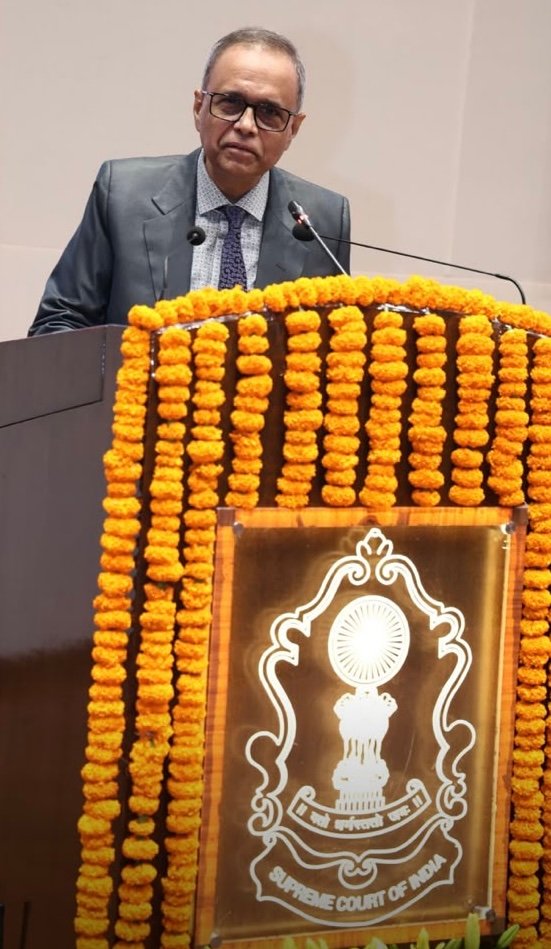
Hon’ble Mr. Justice Joymalya Bagchi
Judge, Supreme Court of IndiaRead profileClose profile
Some judges are remembered for a single monumental judgment while others are remembered for a distinctive way of seeing the law as a philosophy that permeates every ruling. Hon’ble Mr. Justice Joymalya Bagchi, Judge, Supreme Court of India, belongs emphatically to the second category, viewing the law through a distinctive lens shaped by a deep commitment to justice, human dignity, and the independence of the judiciary. Elevated as a Judge of the Supreme Court of India in March 2025, his journey to the Apex Court reflects a distinguished career at the Bar and on the Bench, marked by a consistent commitment to the principles that lie at the heart of the rule of law.
Born in Kolkata in October 1966, His Lordship’s journey from Calcutta Boys School to the University of Calcutta, where he stood first in all his LL.B. examinations; was marked by an early and rigorous commitment to legal excellence. Enrolled as an advocate in November 1991, he spent two decades building a practice of remarkable range and courage at the Calcutta High Court and the Supreme Court. His brief was not confined to any one ideology; it was defined by a steadfast commitment to constitutional principles. He successfully challenged the West Bengal government’s ban on Taslima Nasreen’s book Dwikhondito, defending free expression as a fundamental principle, not a mere preference. He sought mercy for Dhananjoy Chatterjee, represented human rights organisations and argued PILS for civil liberties and the environment. This was a barrister who, in the words of one observer, understood that a lawyer’s duty was to be a “brand ambassador of the judiciary”.
Elevated to the Bench of the Calcutta High Court in June 2011 and later to the Supreme Court in March 2025, Justice Bagchi has consistently translated his advocacy for human dignity into judicial action. His Lordship’s judicial philosophy is perhaps most clearly distilled in his approach to the ultimate penalty. A Division Bench on which he sat held that a death sentence cannot rest on the gravity of the offence alone, prioritising the reformation and rehabilitation of the offender. In the 2013 Kamduni gang rape and murder case, he commuted the death sentences of two convicts to life imprisonment, holding that the trial Court had “erred in awarding death penalty with reference to the gravity of the offence alone”.
His Lordship’s commitment to the law was matched by a commitment to teaching it. Justice Bagchi was a part-time lecturer at the University of Calcutta’s Law Department and Jogesh Chandra Choudhury College of Law, a guest lecturer at NUJS, and a guest speaker in a UGC-sponsored refresher course on Human Rights in India. Appointed to the Calcutta High Court on 27 June 2011, he was transferred to the Andhra Pradesh High Court on 4 January 2021 before being repatriated to Calcutta on 8 November 2021. The Collegium, weighing his 13-year tenure, merit, integrity and competence, recommended his elevation, also noting that only one Judge from the Calcutta High Court then sat on the Supreme Court. At the time, he stood at Serial No. 11 in the combined All-India seniority of High Court Judges. His appointment was confirmed on 10 March 2025 and he was sworn in on 17 March 2025. He is in line to become the Chief Justice of India in May 2031, until his retirement on 2 October 2031.
His Lordship’s humanitarian instinct is matched by a profound commitment to the machinery of justice itself. He has been a tireless advocate for judicial education and transparency, chairing committees to draft Court reports and establishing the first-ever Baseline Report on the National Framework for Court Excellence. His recent judgments continue this trajectory. In November 2025, a Bench led by him directed High Courts to maintain a public dashboard on their websites to track the reservation and pronouncement of judgments, stating that such a measure “will show the transparency and accountability of the judiciary to the people”.
In a powerful suo motu intervention in May 2026, he and the Chief Justice of India voided bail conditions that compelled Dalit and Adivasi protesters to clean police stations, declaring them “reflective of caste-based bias” and a violation of human dignity. Most recently, in September 2026, he displayed a rare judicial candour by observing, on the subject of judicial delays, that “I think we should see the mirror before we give directions. There are so many statutes where the judiciary is required to complete proceedings within a time. We are gloriously in breach of that”.
That philosophy recurs across his capital jurisprudence. In State of W.B. v. Saiful Ali, a Division Bench held that the State had failed to prove conspiracy beyond reasonable doubt, observing that “life imprisonment for the remainder of natural life is a more humane substitute that adequately addresses societal concerns of recidivism.” In Samsuddin Sk. v. State of W.B., the Court held that "mere reference to gravity or heinousness of the crime is not enough" and that a sentencing court “must satisfy its conscience that there is no possibility of rehabilitation and reformation of the convict.” On the Supreme Court Bench, that same instinct produced In re: Condition Being Imposed While Granting Bail by High Court of Orissa, where a Bench of HMJ Surya Kant, C.J and HMJ Joymalya Bagchi, J. declared bail conditions requiring accused persons to clean police stations “abhorrent, degrading, and unknown to law” and null and void.
The warning was not theoretical. In Harshita Grover v. Union of India, a Bench of HMJ Surya Kant, CJI, HMJ Joymalya Bagchi and HMJ V. Mohana, JJ. prohibited the circulation of out-of-context clips of court proceedings on social media without prior permission, while protecting reporting by recognised news outlets. In Abhishek Baxi v. Union of India, the same Bench upheld the APAAR Scheme but directed that the consent form expressly offer parents an opt-out, holding such a safeguard essential to make consent meaningful and informed. Each decision reflects the same conviction: that the conditions under which the judiciary is perceived must themselves be protected.
Yet, it is, His Lordship’s vision for the future of the judiciary articulated so powerfully in his recent address at the Justice HR Khanna Symposium where, he warned that the gravest threat to judicial independence today is not from the executive or legislature, but from the “machine learning algorithms of the Big Tech,” which can tilt public opinion against the judicial process through “curated public outrage”. Calling social media a hydra-headed challenge, he observed that “dispassionate adjudication is being auctioned on the altar of ‘likes’... Guilt manufactured online brands the acquitting judge as having erred for being fair”. He further noted that while “Article 121 silences even parliament from discussing a judge’s conduct... the digital public square tries him daily”.
To counter this, he prescribes not a retreat, but a return to first principles. He reminds us that “the last line of defence is not architectural, but an unwavering character of the judge”. And he offers a warning that is as profound as it is timely, “A judge is bound by oath to act without fear of the digital mob, without favour towards the applauding crowd, and above all, without followers. For the new media rarely threatens a judge with punishment. It tempts him with approval, and approval corrodes independence more quietly than fear ever did”.
In a world where the loudest voices are often the least informed and the fastest verdicts are the least considered, Justice Bagchi’s words remind us that the Judge’s true shield is not public applause, but the quiet, stubborn integrity of a conscience answerable only to the Constitution.

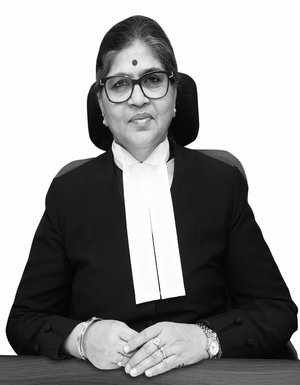
Hon’ble Mrs. Justice Sunita Agarwal
Judge, Supreme Court of IndiaRead profileClose profile
The public profile of Hon’ble Mrs. Justice Sunita Agarwal is best read as a study in institutional steadiness, a lawyer who built her practice in the writ and civil courts of Uttar Pradesh, a High Court Judge who treated access to justice as a measurable obligation and a Chief Justice who addressed artificial intelligence not as a spectacle but as a question of judicial independence, where she has consistently argued that innovation must remain subordinate to constitutional accountability.
Born on 30th April 1966 in Faizabad, now Ayodhya, Uttar Pradesh, Justice Agarwal came from a family connected with the legal profession; her father was a taxation lawyer. She graduated in science from Lucknow University and obtained her LL.B. from Awadh University in 1989. Enrolled on 16th December 1990, she practised at the Allahabad High Court for over two decades across civil, writ, original and commercial jurisdictions. That grounding in the everyday work of a busy High Court land, service, revenue, contracts and constitutional writs shaped her later insistence that access to justice is not an abstract ideal but the ordinary litigant’s experience of delay, cost and comprehension.
Appointed Additional Judge of the Allahabad High Court on 21st November 2011, she was among the first batch of judges at that High Court to undergo mediation and conciliation training, an early indication of her interest in resolving disputes without compounding the burdens of litigation. Her Ladyship’s judicial career graph reflects a consistent concern for dignity and equal citizenship. She has been part of Benches that protected the rights of LGBTQ persons and persons living with HIV/AIDS and during the COVID-19 lockdown, she was associated with decisions that restrained punitive action against persons distributing food to those in need. She has also held public authorities to account in matters involving delayed compensation to families of sanitation workers who died in manual scavenging and a Bench led by her took suo motu cognizance of alleged sexual harassment at a National Law University.
As Chief Justice of the Gujarat High Court from July 2023, Justice Agarwal became the only woman Chief Justice of a High Court at that time and used the office to foreground both mediation and technological governance. Her most notable contribution to the tech-law debate is her insistence that AI must remain an aid, never an adjudicator. Under her leadership, the Gujarat High Court engaged with a policy framework for AI use in judicial administration, drawing a clear line between permissible administrative and analytical assistance and impermissible use in decision-making or judgment-writing. Her caveat on use of AI is precise: the danger of AI is not only error but dependence. “When AI consistently meets our expectations,” she observed, “we slowly stop questioning and double-checking it. Independent judicial thought quietly begins to erode.” For her, judicial wisdom is not algorithmic intelligence; it is the disciplined application of law and a human conscience free from embedded bias.
Her Ladyship’s vigilance extends to the digital public sphere. In a public interest litigation concerning deepfakes and AI-generated misinformation, a Division Bench led by her sought responses from major technology intermediaries, linking platform accountability to the integrity of public discourse and the fairness of judicial proceedings. At the same time, she has been an active proponent of mediation and court-annexed dispute resolution, arguing that access to justice is strengthened not only by faster software but by institutional design that reduces adversarial delay and makes the system intelligible to ordinary litigants. Elevated to the Supreme Court in 2026, she carries that same approach into the apex court.
Her farewell remarks at the Gujarat High Court capture the ethic that connects her courtroom work to her approach to technology. Her Ladyship urged young women in the profession not to let others doubts define their limits, recalling that it was perseverance which carried me through and she returned to the Judge’s prayer to hear patiently, consider diligently, understand rightly and decide justly, with humility enough not to be misled by wilfulness, vanity or egotism.
This combination of perseverance, procedural care and constitutional humility explains why her contribution to the technology-and-justice debate is less about novelty than about first principles. In an age of curated outrage and automated efficiency, Justice Agarwal’s position is that the judiciary’s legitimacy rests not on the speed of its tools but on the independence of the mind that uses them.

Hon’ble Mr. Justice Alpesh Yeshvant Kogje
Chief Justice, High Court of Madhya PradeshRead profileClose profile
Hon’ble Chief Justice Mr. Alpesh Yeshvant Kogje was appointed as the 30th Chief Justice of the High Court of Madhya Pradesh on 10th September 2026. His journey to the Bench reflects a breadth of experience across advocacy, prosecution, taxation and judicial administration, shaping a judicial perspective grounded in both institutional responsibility and public service.
Hon’ble Chief Justice Kogje was born in July 1969. He completed his law degree at the Maharaja Sayajirao University of Baroda in 1993 and began practising in Gujarat the same year. What stands out is how much of his Bar career was spent on the side of the State and the public interest. He was appointed Assistant Government Pleader in 2001 and Additional Public Prosecutor in 2002, continuing in that office until 2007. He served as Standing Counsel for the Central Excise and Customs Department from 2008, and in 2011 was appointed Special Public Prosecutor for a Special Investigation Team before the Gujarat High Court and Special Counsel for a Special Task Force. His brief was not confined to any one field, he handled criminal prosecution on one side and indirect taxation on the other, and also dealt with a large number of important cases arising out of the 2002 post-Godhra riots. This spread of work prepared him well for the Bench.
His Lordship joined the Gujarat High Court as an Additional Judge in April 2016 and was confirmed as a permanent judge in March 2018. In his years there, his docket was wide: civil service matters, revenue laws, indirect taxation, and contempt of Court. Reports on his appointment also note his decisions on the criminal justice system and on fairness in administrative action. He also carried administrative responsibility, serving on committees of the Court the kind of unglamorous work that keeps a judicial system running.
His Lordship’s judicial philosophy is perhaps best captured by his approach to the most consequential of cases. Weeks before his elevation, he was part of the Bench that upheld 38 death sentences in the 2008 Ahmedabad serial blasts case. The Division Bench, comprising Justices Kogje and Samir Dave, delivered a 2,215-page judgment confirming the convictions, observing that the accused had “not exhibited any remorse” and that the act was “not a case of causing murder simpliciter but… an act of striking terror.” Yet his judicial temperament has also shown a distinct concern for the dignity of the ordinary citizen. In 2024, a Bench led by him reprimanded the authorities over Ahmedabad’s traffic chaos, stating plainly that “citizens do not pay taxes to face inconvenience on roads.”
His Lordship’s vision for the judiciary has been articulated with equal clarity since taking office in Madhya Pradesh. At his welcome ceremony, he emphasised that “a good Bar is the first requirement of a good Court,” stressing the importance of an independent legal profession, judicial fairness, and institutional cooperation for a litigant-centred justice delivery system. Just days later, a Division Bench led by him disposed of a PIL into the Sagar spurious liquor tragedy, allowing the petitioner to raise concerns before the judicial commission while expressing satisfaction with the state’s response. And on the critical issue of POCSO cases, he observed that “lack of awareness about the law was a major factor behind the trend,” directing a High Court committee to monitor the implementation and publicity of the Act, noting that “pending criminal cases and criminal appeals in POCSO cases can only be speedily disposed of if the inflow of fresh cases can be controlled.”
At his farewell in the Gujarat High Court, Justice Kogje spoke with unusual emotion about his attachment to the institution. “I have to attribute everything I am today to this great institution,” he said. “I believe in rebirth, so I pray to God also that in my next birth let me be associated with this institution only and no other.” To the young members of the Bar, he offered a simple but profound message: “Please treat this institution as your second home. This is where you will draw your strength, reputation and maybe a path for your next generation.”
A Chief Justice who has initially argued for the State, prosecuted the terrorists, handled tax law and then a judge is a useful reminder that the law is a whole system, not a single specialisation. He is a jurist who believes that “skills in the legal field do not come naturally but have to be developed,” and who cites Nelson Mandela’s observation that education is the most powerful weapon which can change the world. He understands that the strength of a Court lies not in its architecture, but in the habits of its incumbents.
In an age where legal practice is increasingly shaped by specialisation and speed, Hon’ble Justice Kogje’s journey reminds us that the strength of the law lies in continuous learning, institutional commitment and the integrity with which one carries the responsibility of the profession.

Hon’ble Mr. Justice Tejas Karia
Judge, High Court of DelhiRead profileClose profile
Hon’ble Mr. Justice Tejas Karia, Judge, High Court of Delhi, is a jurist who has spent his career building the frameworks through which disputes are resolved, not only arguing within them. He sees law as a living structure, one that must be continually refined, institutionalised and kept in step with the world it governs. Elevated as a Judge of the Delhi High Court on 14th February 2025, His Lordship brings to the Bench a career defined by rigour, versatility and a steady commitment to the rule of law.
Born in Ahmedabad in February 1978 into a family of judges and lawyers, His Lordship's journey from the ILS Law College, Pune, where he earned his LL.B. in 2000 to the University of Gujarat, where he completed an LL.M. in Corporate Laws and then to the London School of Economics, where he specialised in International Arbitration and Information Technology Laws was marked by an early and deliberate pursuit of both depth and breadth. His Lordship began practice at the Ahmedabad City Civil Court in 2000, gaining first-hand experience of trial court proceedings, and from 2001 appeared before the Gujarat High Court in writ petitions, Letters Patent Appeals and civil and criminal appeals. His Lordship’s practice was never confined to one forum. His lordship conducted a Court Martial as special defence counsel appointed by the Indian Army and appeared before the Revenue Tribunal, the Central Administrative Tribunal, the Debt Recovery Tribunal, the State Consumer Commission and the Family Court. This was a lawyer who learned the justice system from the ground up.
In 2004, he Lordship moved to Delhi and joined Amarchand Mangaldas & Co., later Shardul Amarchand Mangaldas & Co., where he rose to head the firm’s Arbitration practice as Partner. His Lordship appeared before High Courts across the country, the Company Law Board, the Securities Appellate Tribunal, the NCLT and NCLAT, the National Green Tribunal, the NCDRC, the Appellate Tribunal for Electricity and the Supreme Court of India in landmark cases. He specialised in international and domestic commercial arbitration, handling complex, high-value ad-hoc and institutional arbitrations across diverse sectors, with seats in India, London and Singapore, in matters involving the appointment of arbitrators, interim measures, and the challenge and enforcement of awards.
He was also appointed as an arbitrator in institutional arbitrations. Alongside this, he handled matters in information technology law, privacy and data protection, intermediary liability, e-commerce, cybersecurity, e-payments, online safety and content regulation. His work was recognised by leading directories, including Band 1 for arbitration by Chambers & Partners, Thought Leader and Global Leader by Who’s Who Legal, Leading Individual by Legal 500, and Asia’s Super 50 Dispute Lawyers by ALB Asia.
His Lordship’s advocacy is matched by a profound commitment to the machinery of dispute resolution itself. His Lordship has served as a Member of the Court of Arbitration of SIAC and of the ICC Commission on Arbitration and ADR as a member of the Sub-committee on Improvement in e-Court Service of the Ministry of Law and Justice, and as Director of CIArb (India) and the Indian Arbitration Forum, besides holding office as Vice-President of the Arbitration Bar of India. Most significantly, he contributed to the drafting of legislation as an advisor to the Law Commission of India for the landmark 2015 amendments to the Arbitration and Conciliation Act as a member of the High-Powered Committee on the institutionalisation of arbitration in India in 2019 and as a member of the Expert Committee on reforms to the Arbitration Act in 2024. His Lordship also appeared before the Parliamentary Committees on the Commercial Courts Act and the Mediation Act.
The jurisprudence his lordship has helped shape bears this out. In Terix Computer Service India Pvt. Ltd. v. TPM Guru Pvt. Ltd. before the Delhi High Court, his Lordship’s involvement helped reinforce the principle of minimal judicial interference at the referral stage, so that substance prevails over form in upholding arbitration agreements. In the watershed case of Amazon.com NV Investment Holdings LLC v. Future Retail Ltd., his lordship represented Amazon before the Supreme Court and helped secure a historic ruling recognising the enforceability of emergency arbitration awards under Indian law, a decision that has reinforced India’s commitment to robust institutional arbitration.
Yet it is His Lordship's forward-looking outlook that sets him apart. Dual-qualified as an Advocate in India and a Solicitor in England and Wales, a Fellow of the CIArb, London, and a Specialist Mediator with SIMC, Singapore, his lordship combines a global perspective with deep expertise in the fields that are dictating the future of legal systems: information technology law, data protection, cybersecurity and digital commerce. A resource person at the National Judicial Academy, Bhopal; a speaker at numerous Indian and international conferences and a co-author of chapters on arbitration and information technology law, he has been as committed to sharing knowledge as to practising it.
His Lordship’s appointment to the Bench is historic for more than one reason. His Lordship is amongst the first judges to be appointed from an arbitration practice and a law firm background, a significant step towards India's vision of becoming a global hub for commercial dispute resolution. HMJ Karia’s career is a reminder that the law is shaped not only by those who interpret it, but by those who help build it, and that this matters most in an age when commerce crosses borders in an instant and disputes demand both speed and certainty. With his experience, scholarship and deep understanding of the law, we are in for a most enriching session today.

Hon’ble Mr. Justice Vivek Rusia
Judge, High Court of Madhya PradeshRead profileClose profile
Hon’ble Mr. Justice Vivek Rusia is a Judge of the High Court of Madhya Pradesh who served as Acting Chief Justice from 1 June 2026, following the elevation of Chief Justice Sanjeev Sachdeva to the Supreme Court of India, until 18th September 2026, when Hon’ble Mr. Justice Alpesh Yeshvant Kogje was sworn in as the substantive Chief Justice. His Lordship has also served as Executive Chairman of the Madhya Pradesh State Legal Services Authority and as Chancellor of Dharmashastra National Law University, Jabalpur.
Born on 2nd August 1969 at Jabalpur, He obtained the degrees of B.Sc. and LL.B. and was enrolled as an Advocate with the State Bar Council of Madhya Pradesh on 8th August 1992. His father, Late Prabhakar Rusia, was a Senior Advocate of the Madhya Pradesh High Court at Jabalpur.
His Lordship began his practice as an associate in the chambers of Late Shri P. Sadashivan Nair, Senior Advocate, Smt. Indira Nair, Senior Advocate and Shri Rajendra Menon (former Chief Justice of the Patna and Delhi High Courts). He commenced independent practice in 1998 and was soon empanelled by a wide range of public bodies, including Coal India Ltd., South Eastern Coalfields Ltd., Western Coalfields Ltd. and Northern Coalfields Ltd.; M.P. Poorv Kshetra Vidyut Vitaran Co. Ltd., M.P. Power Generating Co. Ltd., M.P. Power Management Co. Ltd. and M.P. Power Transmission Co. Ltd.; M.P. Housing & Infrastructure Development Board; M.P. Laghu Udyog Nigam; Nagar Panchayat Shahpura/Mundi; the District Cooperative Agriculture & Rural Development Banks of Panna, Sidhi and Satna; the Cantonment Board, Jabalpur (1998 to 2008); and the Jabalpur Development Authority (2000 to 2004).
He served as Standing Counsel for the Government of India for 3 years, appearing on behalf of the Union of India before the High Court of Madhya Pradesh at Jabalpur. His Lordship’s practice spanned civil, criminal, constitutional, service, revenue, taxation and arbitration matters. He was also elected Joint Secretary of the High Court Advocates Bar Association, Jabalpur and is a life member of both the High Court Bar Association and the District Bar Association, Jabalpur.
He was appointed as a Judge of the High Court of Madhya Pradesh on 7 April 2016 and became a Permanent Judge on 17 March 2018. His Lordship’s docket spans service law, administrative law, arbitration and criminal jurisprudence. He has sat on numerous Division Bench matters and was part of a five-judge Larger Bench constituted to answer references on significant legal questions. In Ashish Tiwari v. State of M.P. (April 2026), His Lordship dismissed a writ petition seeking revaluation of an answer sheet noting that the university regulations made no provision for revaluation and that even the marks claimed would not have crossed the passing threshold.
As Executive Chairman of the MPSLSA, Justice Rusia has been instrumental in expanding community mediation in Madhya Pradesh. In June 2025, he attended the inauguration of India's first community mediation centre within a police commissionerate, established in Indore and on 12th February 2026 he inaugurated four Community Mediation Centres. Under his lordship’s Chairmanship, the State Legal Services Authority has promoted grassroots dispute resolution through trained community volunteers across the Malwa region.
His landmark rulings in the realm of arbitration, for instance, have clarified the limited jurisdiction of Execution Courts, holding that they cannot modify or declare an arbitral award void when it has attained finality under the Arbitration and Conciliation Act. In a separate significant decision, he held that contractors can approach an arbitration tribunal within three years for disputes arising during a subsisting works contract thereby clarifying the interplay of limitation periods under the Madhya Pradesh Madhyastham Adhikaran Adhiniyam, 1983. His judicial canvas also extends to matters of public interest, where he has not shied away from prescribing strong, corrective measures, such as advocating for heavy fines to instil civic sense and improve traffic management in Indore.
In Justice Rusia, the judiciary finds not only an able administrator and a champion of alternative dispute resolution but also a jurist whose expansive practice at the Bar has translated into a robust and multifaceted jurisprudence on the Bench, equally at home with the intricate nuances of arbitration law and the pressing concerns of public accountability.

Hon’ble Mr. Justice Anand Pathak
Judge, High Court of Madhya PradeshRead profileClose profile
Hon’ble Mr. Justice Anand Pathak is a sitting Judge of the High Court of Madhya Pradesh and Chairman of the High Court Legal Services Sub-Committee at Gwalior. His career reflects a trajectory from diverse litigation practice to a distinctive judicial focus on environmental law, juvenile justice and access to justice.
Born on 18th July 1968 at Chhatarpur, Madhya Pradesh, Justice Pathak was a recipient of the National Merit Scholarship at graduation and a meritorious student in M.A. (History). Beyond law, his lordship undertook a Private Pilot Licence (PPL) course on scholarship and was a keen sportsman, participating in cricket at the national level and representing the state and college levels in hockey and volleyball.
Justice Pathak practised at the High Court of Madhya Pradesh across civil, constitutional, revenue, criminal, contractual and service matters. From 2005 to 2009, he served as Government Advocate in the Advocate General‘s Office. His lordship regularly represented the various public sector institutions including Western Railway, IRCTC, Employees Provident Fund, M.P. Power Transmission Company, Hindustan Lever, ICICI, HDFC and Vikram University.
A notable dimension of his lordship’s Bar career was his engagement with Lok Adalats, sitting as Member in ‘continuous and permanent’ Lok Adalats and National Lok Adalats for 7 - 8 years. He also appeared in important Public Interest Litigations.
His Lordship served as Secretary of the High Court Bar Association, Indore, for the 2010-11 session, coinciding with the Association’s Golden Jubilee Year and is also a Life Member of the Indian Institute of Public Administration, New Delhi.
Justice Pathak was appointed as an Additional Judge of the High Court of Madhya Pradesh on 7th April 2016 and confirmed as a Permanent Judge on 17th March 2018.
In March 2025, Justice Pathak chaired the Technical Session on “Forest and Biodiversity Conservation” at the National Green Tribunal‘s National Conference on Environment, 2025. His Lordship proposed transforming minor environmental penalties into plantation initiatives, developing corporate climate responsibility, creating a National Carbon Credit Bank and establishing Sovereign Funds for biodiversity conservation. His Lordship framed the necessary conceptual shift as moving “from human rights to planetary rights”.
HMJ Pathak serves as Chairman of the Juvenile Justice Committee of the Madhya Pradesh High Court. Under his lordship’s chairmanship, a resolution led to the establishment of the Centre for Juvenile Rights (JURIC) at Dharmashastra National Law University (DNLU), Jabalpur, inaugurated in June 2025.
His Lordship’s most distinctive contribution is the “Shaurya Didi” concept, a grassroots initiative empowering women as protectors and mentors for children in vulnerable communities. In a 2024 habeas corpus matter, HMJ Pathak’s Bench appointed a woman police constable as “Shaurya Didi” for a recovered minor, with directions for weekly visits and mentorship over six months. His lordship has also advocated for social audits of childcare institutions to ensure transparency and dignity for children in institutional care.
At the launch of a certificate course in mediation organised by the Madhya Pradesh State Legal Services Authority and DNLU, Justice Pathak spoke on the human dimensions of dispute resolution, stressing that mediation by preserving relationships and dignity offers a more humane and enduring path to justice than adversarial litigation.

Hon’ble Mr. Justice Sanjeev S. Kalgaonkar
Judge, High Court of Madhya PradeshRead profileClose profile
Some judges arrive on the bench through the familiar corridors of a celebrated trial practice, their reputations forged in the heat of courtroom battle, while others come bearing the quiet, accumulated wisdom of a lifetime spent within the machinery of justice itself, understanding its every cog and wheel from the inside. Hon’ble Mr. Justice Sanjeev S. Kalgaonkar, Judge, High Court of Madhya Pradesh, belongs emphatically to the second category.
His is not a story of dramatic, single-cause advocacy but of a steady, deliberate ascent through the district judiciary to the highest administrative echelons of the Indian judicial system, a journey that has given him a uniquely holistic view of the law as a living, breathing institution that must be nurtured, modernised and, above all, trusted.
Born in the small town of Baihar in the Balaghat district of Madhya Pradesh on 23 February 1970, His Lordship’s path was marked by an early and decisive commitment to the law. He pursued his legal education at Nagpur University and, in a testament to his precocious ability, was selected for the Madhya Pradesh Judicial Service at the remarkably young age of 22 years and 10 months in 1992, officially joining the service on 24 May 1994.
This early entry into the judicial fold was not merely a job but the beginning of a lifelong apprenticeship in the art of judging. Demonstrating a steady and impressive rise through the ranks, he cleared the Higher Judicial Services examination of the Madhya Pradesh High Court in 2006 at the age of 36. Over the ensuing years, he served with distinction as the Principal District & Sessions Judge in districts such as Khandwa and Bhopal, gaining a granular understanding of the challenges faced by the subordinate judiciary and the litigants who approach it.
A defining chapter in his career and one that sets him apart from many of his contemporaries, came when he was selected as the Secretary General of the Supreme Court of India through an interview conducted by then Chief Justice of India, Justice Ranjan Gogoi. He served his first three-year term from November 2018 to November 2021 and was reappointed to this prestigious administrative post in November 2022, a clear reflection of the profound trust reposed in his administrative capabilities and his deep understanding of the apex court’s inner workings. This tenure was not a mere administrative interlude but a period of significant responsibility, where he was entrusted with the stewardship of the Supreme Court’s day-to-day functioning, from managing its docket to overseeing its interface with the government and the public. It was a role that demanded not just legal acumen but a rare talent for quiet, effective administration.
On the recommendation of the Supreme Court Collegium led by Chief Justice D.Y. Chandrachud, Justice Kalgaonkar was elevated as a Judge of the Madhya Pradesh High Court and was administered the oath of office on 1 May 2023. The Collegium’s resolution was effusive in its praise, noting that his judicial performance was excellent or very good and his annual confidential reports were noteworthy.
As a Judge, Justice Kalgaonkar has consistently translated his administrative experience and his deep-seated understanding of human realities into a pragmatic and rights-based jurisprudence. His judicial philosophy is perhaps most clearly distilled in his approach to personal liberty and the socio-economic realities of those who come before him.
In a significant bail order in the case of Shahabuddin v. State of Madhya Pradesh, he did not restrict his gaze to the gravity of the alleged offence alone but looked beyond it, taking into account the applicant’s age, his profession as a labourer, his status as the sole bread earner of his family and his socio-economic background, holding that these factors pointed towards no likelihood of flight or tampering with evidence. It was a decision that reflected a deep understanding that the law is not an abstract edifice but a human institution whose consequences ripple through the lives of the most vulnerable.
His Lordship’s commitment to the integrity of the judicial process is equally evident in his interpretation of substantive law. In a notable ruling, he emphasised the high threshold required to establish the offence of abetment to suicide, observing with characteristic clarity that abetment requires a mental process of instigating or aiding a person in committing an act and that without a positive act of instigation or aiding, a charge under Section 306 of the Indian Penal Code cannot be sustained. This insistence on a rigorous, evidence-based approach is a hallmark of his judicial method.
Similarly, in a landmark decision ordering the registration of an FIR in a case of alleged financial misappropriation, he articulated the scope of a Magistrate’s discretion under Section 156(3) of the Criminal Procedure Code, holding that where the Magistrate finds a prima facie cognizable offence and facts indicating the need for police investigation, the discretion granted by the statute can only be read as a duty to order the police to investigate. These rulings reveal a judge who is deeply attentive to the fine balances of statutory interpretation and the foundational principles that govern the exercise of judicial power.
Beyond the courtroom, Justice Kalgaonkar has been a tireless advocate for the modernisation and strengthening of the justice delivery system. His experiences as the Director Incharge of the Madhya Pradesh State Judicial Academy and his current role as a judge of the High Court have made him a leading voice in the integration of technology into the criminal justice process. Addressing workshops on the Interoperable Criminal Justice System, he has stressed the critical need for digital charge sheets, secure digital storage and seamless data sharing among the police, judiciary, prosecution and forensic services, noting that modern technologies such as Artificial Intelligence and Machine Learning will make the Indian criminal justice system more effective, swift and smart.
He has also championed the digitisation of health services to support the criminal justice system, pointing out that data entry operators often fail to make accurate entries and that digitally enabled systems are essential to avoid such errors. This forward-looking vision is not a mere fascination with technology but a recognition that the legitimacy and efficiency of the judiciary depend on its ability to adapt and evolve.
His Lordship’s tenure as a High Court Judge is expected to continue until his retirement on 22 February 2032. It is a tenure that promises to be defined not by a single, monumental judgment but by a consistent and cumulative contribution to the law and its institutions, built on a foundation of unshakeable integrity, administrative sagacity and a profound empathy for the human condition.
In a judicial landscape often dominated by the loudest voices and the fastest verdicts, Justice Kalgaonkar’s career is a quiet reminder that the true strength of the judiciary lies not in the applause of the crowd but in the steady, patient and principled work of building a system that is fair, efficient and, above all, humane.
From the Bar

Mr. S. Gurukrishnakumar
Senior Advocate, Supreme Court of IndiaRead profileClose profile
Mr. S. Gurukrishnakumar came to the Bar of the Supreme Court after serving the State of Tamil Nadu as its Additional Advocate General. The Supreme Court designated him a Senior Advocate with effect from 21st November 2012.
In the years since, his practice before the Court has been marked by institutional litigation in which the question is how a public body and not merely a private party, answers to the law. Two matters from the past few weeks show this. He appears for the Bar Council of India in the proceedings concerning the continuation of its Chairman, Manan Kumar Mishra, after an April 2025 notification extended the Chairman’s term until 2030. That challenge asks who may lead the regulator of the legal profession and for how long, once the democratic mandate of the Council itself is in question.
The second matter arises from the deputation of IPS officers to the Central Armed Police Forces. He appeared for the contempt petitioners, who allege that the Court’s directions on the subject have not been followed.
In his practice before the Supreme Court, Mr. Gurukrishnakumar has appeared in a wide range of significant matters including the Chhattisgarh liquor scam proceedings, the Byju’s insolvency appeals and the Bhojshala-Kamala Maula mosque complex dispute. Beyond his regular appearances, he has also been appointed as amicus curiae by the Supreme Court, where he provided elaborate suggestions recorded in official minutes of meetings, demonstrating the Court’s confidence in his independent judgment on complex legal questions. He has also spoken publicly on constitutional issues outside the courtroom including at the 6th National Symposium on Landmark Judgments in January 2023, where he addressed the Supreme Court’s judgment on reservations for economically weaker sections and has engaged with the contours of the anti-defection law.
What the record shows, in the end, is a lawyer whose appearances keep returning to the same question: whether an authority, once it holds power, can be made to explain how it uses it. That is a fitting concern for a member of the Bar whose career began on the side of the State and who now argues for and against the institutions that carry its authority.

Mr. Rajshekhar Rao
Senior Advocate, Delhi High Court and Supreme Court of IndiaRead profileClose profile
From a first-generation entrant to the profession to a Band 1 Senior Advocate at the Delhi High Court, Mr. Rajshekhar Rao’s career has been built entirely on merit, candour and craft. Practicing before the Delhi High Court and the Supreme Court of India, he is regarded as a legal generalist who enjoys the confidence of the Bench. Designated a Senior Advocate on 19th March 2021, he brings to the Bar a philosophy of rigorous honesty and professional transparency and a deep interest in mentoring the next generation.
Born in 1975, with no family background in the legal profession, Mr. Rao’s journey to the National Law School of India University, Bangalore where he earned his B.A. LL.B. (Hons.) in 1999 and was a university gold medallist was marked by early distinction. He was enrolled with the Bar Council of Delhi in 1999 and began practice before the Supreme Court of India in the chambers of Ms. Indu Malhotra, later a Judge of the Supreme Court. He then spent 5 formative years in the chambers of Mr. Gopal Subramanium, former Solicitor General and Senior Advocate, assisting as junior counsel in significant matters such as the Tehelka Commission inquiry and the Parliament Attack case before the High Court and the Supreme Court.
In 2006, he established his independent practice, Chambers of Rajshekhar Rao. He appears before the Delhi High Court, the Supreme Court and tribunals such as the NCLAT, with specialisation in civil-commercial litigation, domestic and international arbitration, competition law, intellectual property, white-collar defence and public law. He has been engaged as Special Counsel for the Directorate of Enforcement in money laundering prosecutions and represents multinational corporations, statutory authorities and infrastructure companies. He is also empanelled as an arbitrator and counsel across leading arbitral institutions and serves as a Senior Advocate Member on committees of the Delhi High Court.
His contribution extends well beyond the cases he argued. He served as Legal Consultant to the Justice Srikrishna Commission on Financial Sector Legislative Reforms, which drafted a blueprint for modernising India's financial regulatory architecture. As amicus curiae before the Delhi High Court, he assisted the Court in two matters of great public importance: the Delhi COVID-19 oxygen crisis and the constitutional challenge to the marital rape exception under Indian criminal law.
His work has been recognised by Chambers and Partners, which places him in Band 1 for Dispute Resolution: Senior Advocates (Delhi High Court). Trained in commercial mediation and knowledgeable in financial reforms and competition policy, he is also a committed educator. He lectures on oral advocacy, litigation strategy and professional ethics at the National Law University, Delhi and Jindal Global Law School and he judges moot Court competitions while keeping close ties with NLSIU Bangalore.
Mr. Rao is equally known for his views on the future of the justice system. He has called for balanced structural reforms, cautioning that shifting commercial and IP litigation to lower Courts must be accompanied by long-term planning and stakeholder consultation. He also speaks of accountability beyond billables, and of chambers built on empathy, mentoring and candour before the Bench.
His journey stands as a reminder that merit, Courtroom ethics and intellectual depth can carry a lawyer to the front rank of the Bar. In an age when the profession is judged by both results and conduct, Mr. Rao’s career reminds us that the finest advocates are those who serve the Court as faithfully as their clients. With his experience, scholarship and deep commitment to the profession, we are in for a most enriching session today.

Mr. Ritin Rai
Senior Advocate, Supreme Court of IndiaRead profileClose profile
Most lawyers at the Indian Bar come to the courtroom from prominent chambers or from the trial courts. Mr. Ritin Rai came to it however from the deal table. He spent the early years of his career drafting and negotiating the commercial transactions whose collapse later fills the Supreme Court’s cause lists and that background still shows in how he argues. Designated a Senior Advocate by the Supreme Court of India in March 2019, he has become one of the most visible counsel in the country on arbitration, insolvency and regulatory disputes, the areas where commercial law is repeatedly tested before the Apex Court.
His training was international from the start. He took a B.A. (Honours) in Economics from St. Stephen’s College in 1992 and an LL.B. from the Campus Law Centre, University of Delhi, in 1995, the year he was enrolled as an advocate in India. He then read for the B.C.L. at St Catherine’s College, Oxford (1997) and took an LL.M. at Harvard Law School (1998). He joined the Business Practice Group of Jones Day’s Cleveland office in 1998 and was admitted to New York in 1999. He returned to India to practise corporate law and, in 2004, moved to a disputes practice by joining the chambers of Ashok H. Desai, Senior Advocate and a former Attorney General for India.
That transition shaped the practice that followed. His work covers company, competition, insolvency and telecommunications law, in the Supreme Court, the High Court of Delhi, the tribunals sitting in Delhi and before arbitral tribunals. He also sits as arbitrator under the ICC, LCIA and SIAC Rules, and in adhoc arbitrations where the High Court of Delhi has appointed him. In September 2019 he accepted a door tenancy at 7 King’s Bench Walk in London, which Bar & Bench reported as the first time the chambers had admitted a lawyer from outside the United Kingdom.
His appearances in insolvency law trace much of the Insolvency and Bankruptcy Code’s early development. He appeared for the home-buyer creditors of Jaypee Infratech in Anuj Jain v Axis Bank, on who counts as a financial creditor under the Code, and again in Jaypee Kensington Boulevard Apartments Welfare Association v NBCC (India) Ltd, on the approval of the resolution plan. In Indus Biotech Pvt Ltd v Kotak India Venture (Offshore) Fund, he argued on how the Code and the Arbitration and Conciliation Act, 1996 interact. His later insolvency matters include the classification of compulsorily convertible debentures in SPCP Luxembourg, of redeemable preference shares in Matix Fertilizers, and the effect of a debt acknowledged in a corporate debtor’s balance sheet in an IL&FS matter. He also appeared in the challenge to the Code’s provisions on personal guarantors.
In arbitration his name is attached to several of the questions the Supreme Court has had to answer. He appeared for SAP India Pvt Ltd in Cox and Kings Ltd v SAP India Pvt Ltd, and later before the Constitution Bench that examined the “group of companies” doctrine. He also appeared for Cochin International Airport Ltd in Gayatri Balasamy v ISG Novasoft Technologies Ltd, which concerned the power of a court to modify an arbitral award in set-aside proceedings. He represented Gammon Engineers and Contractors in the challenge to the 2019 amendments to the Arbitration Act, and Chennai Metro Rail Ltd in the proceedings on the disqualification of an arbitral tribunal whose fees one party had fixed unilaterally. He also appeared in the line of cases on arbitration agreements contained in unstamped instruments, for Intercontinental Hotels Group (India) and Weatherford Drilling International. In 2025, he represented a party before a Constitution Bench in Rajul Manoj Shah, on the power of a court to entertain a counterclaim.
Alongside the courtroom, he teaches a course on the practice of commercial disputes at the Jindal Global Law School. What his career offers a young lawyer is a case for breadth over early specialisation. A lawyer who has sat on the transactional side knows what a clause was meant to do before a Court is asked what it means. In a field where the law changes through cases about contracts, shares, debentures and guarantees, that is a real advantage, and Mr. Rai has used it in front of the Supreme Court for the past several years.

Mr. K. Parameshwar
Senior Advocate, Supreme Court of IndiaRead profileClose profile
In a profession where reputations are often measured by the cases won, Mr. K. Parameshwar’s has been built on the hard questions of law that the Supreme Court of India turns to him to help answer. A Senior Advocate and advocate-on-record, after roughly 17 years of practice, he is among the youngest national law school graduates to receive the silk at the Supreme Court. He has made his mark in constitutional law, criminal jurisprudence, service law and regulatory disputes through rigorous research and careful, structured argument.
Born into a Malayali family, Mr. Parameshwar completed his early schooling at the Kochi Naval Public School in Kerala. He then went on to NALSAR University of Law, Hyderabad where he completed his B.A. LL.B. (Hons.) in the 2002-2007 batch. He was enrolled as an advocate in 2007, immediately after graduating and began his litigation practice in New Delhi, assisting senior members of the Bar. Notably, he worked closely with Sr. Adv. Raju Ramachandran, assisting him when Mr. Ramachandran was appointed amicus curiae in the 2012 Nirbhaya case.
He went on to build an independent practice and qualified as an advocate-on-record at the Supreme Court of India. His work centres on constitutional law, complex criminal matters, administrative challenges and regulatory disputes. In August 2023, the Government of Uttar Pradesh appointed him Additional Advocate General to lead the State’s litigation before the Supreme Court.
His practice reflects this range. He has advanced structured constitutional submissions on individual religious freedom and institutional autonomy under Art. 25 and 26 in the Sabarimala matter. In a significant service law matter before the Supreme Court, he appeared for officers of the Central Armed Police Forces in their claim to be treated as an Organised Group ‘A’ Service, highlighting the stagnation faced by cadre officers because of the limited promotional vacancies available to them, a consequence of the continued deployment of IPS officers on deputation. He has also represented manufacturing bodies in pan-India environmental proceedings before the Supreme Court, helping to balance regulatory compliance with the development of greener alternatives.
Mr. Parameshwar is regularly called upon by the Supreme Court to serve as amicus curiae. In the long-running writ petition, the Court appointed him in recognition of his research on open prisons and camps, work that seeks to move the penal system from incarceration alone towards the rehabilitation of prisoners. He was also recently appointed to assist the Court on whether criminal proceedings can be quashed against one accused on the basis of a partial compromise when several co-accused are involved, a question arising under Sec. 482 of the CrPC and its counterpart in the BNSS.
He is also a thoughtful commentator on the working of the Xth Schedule, the anti-defection law. He has argued that the deletion of the “one-third split” provision by the 2003 amendment has inadvertently stifled internal party democracy, and that in family-run or tightly controlled regional parties, legislators live in constant fear of losing their seats if they differ with the leadership. He has also pointed out that the constitutional expectation of the Speaker acting as an independent adjudicator often falls short in practice, as defection petitions are frequently left undecided for long periods.
His designation as a Senior Advocate was a moment of pride for his alma mater, NALSAR, and stands as a benchmark for a new generation of national law school graduates who reach the top of the Bar through merit. An advocate who is trusted to argue for a client and to assist the Court is held to a high standard of both skill and integrity. Mr. Parameshwar’s career reflects that standard. With his experience in constitutional and criminal law and his understanding of the Court’s concerns, we are in for a most enriching session today.

Mr. Siddharth R. Gupta
Advocate, Supreme Court of IndiaRead profileClose profile
The most useful legal writing does not merely report what Courts have said; it tells you what to read, in what order and why it matters. Mr. Siddharth R. Gupta has built a substantial reputation on precisely this front of service. A practising advocate and Partner at SVS Attorneys, he is also one of SCC Online’s most prolific contributors, producing a steady stream of annual round-ups, doctrinal analyses and case commentaries that function as reference works for practitioners, scholars, exam aspirants and students alike. Where many commentators offer scattered observations, Mr. Gupta offers architecture structured, systematic accounts of the Indian judiciary’s most consequential output. This is in the form of treatises on landmark Constitutional law judgements, landmark PMLA Judgements of the Indian courts & such other series of articles.
Mr. Gupta is a graduate of NLIU, Bhopal, 2006 Batch and is practising before the Supreme Court of India. He also has regular appearances before various High Courts across the country. Mr. Gupta began his legal career under the guidance of Mr. Vivek K. Tankha, Senior advocate.
Over the years, he has handled a wide range of matters including disputes relating to real estate, education, taxation, service law, white collar crimes and arbitration. For almost 4 years he was also standing counsel for the High Court of Madhya Pradesh establishment, representing the High Court as a party before various Courts. His clientele includes corporates, industries, prominent media houses, various PSUs, and he also currently represents RERA, MP before the Supreme Court. At one point he appeared for 9 nationalised PSU banks, handling financial and monetary matters on the largest scale in the High Court of Madhya Pradesh. In 2022, after almost 16 years of practice in the Madhya Pradesh High Court, he shifted his practice and headquarters entirely from the High Court to the Supreme Court.
Mr. Gupta also has experience of appearing before two Constitution Benches on issues concerning the determination of seniority of judicial officers under various constitutional provisions. He represented a significant group of constitutional functionaries before the Bench, which, in 2025, delivered landmark judgments on the determination of seniority among higher judicial officers and the interpretation of Article 232 (2) of the Constitution of India.
Alongside his practice, Mr. Gupta is also one of the founding members and CEO of the CAN Foundation, for the ‘Confederation of Alumni for National Law Universities.’ The Foundation was formed by about fifteen NLU graduates. CAN Foundation today has stretched its footprint to all the NLUs of the country through its scholarship initiatives meant for financially dispersed students. It has touched the lives of more than 150 undergraduate scholars in the last 7 years by facilitating dispersal of scholarships worth more that Rs. 3 Crores as “Guru Dakshina” to the institutions that gave them their legal education.
It is as a writer, however, that Mr. Gupta has built a reputation beyond the courtroom. He is extensively involved in academic writing for the SCC-EBC group and is the author of a one-of-its-kind summary of all the Constitution Bench & constitutional law judgments delivered by the Supreme Court of India over the last many years. These compilations are referred to and relied upon by a large number of law graduates and undergraduates across the country who are preparing for judiciary exams, law clerk exams, CLAT PG and the like.
His regular academic contributions to various legal portals and publishers reflect an unusual methodological discipline. Each piece is, in effect, an attempt to impose order on the relentless flow of Indian judicial output: to identify which decisions matter, why they matter and how they fit into existing doctrinal frameworks.
He is also prolifically involved in academic discussion and discourses as well, being invited frequently to eminent National Law Universities for addressing students on contemporary and contested subjects. He has been invited as a Keynote Speaker on Topical discussions upon amendment to the Arbitration Act, constitutional subjects and also Jurisprudential debates. For a practitioner of law before the highest court of the country, this is a selfless service; for a scholar, it is an ever lasting resource. And for anyone attempting to understand how the Indian Constitution & crucial legislations are being interpreted in real time, Mr. Gupta's academic contributions offer something increasingly rare, a reliable map of shifting terrains.
PDPM IIITDM Jabalpur
Dumna Airport Road, P.O. Khamaria, Jabalpur – 482005, Madhya Pradesh, India